 Masar Center in Jeddah
Evidence-based medical guide
Hashish (Cannabis): Effects, Risks, Withdrawal, Detection and Treatment
Hashish is a concentrated resin product derived from cannabis and usually contains THC, a substance that can alter memory, mood and perception. Its use can cause anxiety, impair attention and coordination, and sometimes develop into cannabis use disorder. In this guide, we explain the difference between hashish, cannabis and marijuana; health effects; urine detection; withdrawal; and how we approach treatment at Masar Center in Jeddah. [Source] [Source]
What is hashish, and is it the same as cannabis?
Hashish (also called hash) is a concentrated resin product derived from the cannabis plant. Cannabis refers to the plant, while hashish is one product made from it. Marijuana or weed typically refers to dried cannabis flowers and other plant material. The terms are related, but not interchangeable. [Source]
Cannabis products contain varying amounts of cannabinoids. The best-known include THC, largely responsible for intoxication, and CBD, which does not produce the same high. Names, colors and appearance alone cannot establish a product’s chemical content. [Source]
Types of cannabis: hashish, marijuana, THC oil and CBD
Cannabis products vary in form, potency and route of use. A product described as “natural” is not necessarily safe. [Source]
| Term | What it generally means |
|---|---|
| Hashish / hash | Compressed or concentrated resin from the cannabis plant. |
| Marijuana / weed | Usually dried cannabis flowers and plant material. |
| Hash oil / THC oil | A cannabis extract that may contain high concentrations of THC, including some vape oils. |
| CBD | A cannabis-derived cannabinoid distinct from THC; a product label does not guarantee it is THC-free. |
Is hashish oil the same as a hair-care oil?
Not necessarily. Searches for “hashish oil” can also refer to cosmetic hair products. Do not assume a hair oil contains intoxicating THC, or that it has the same risks as a THC concentrate. Check the actual ingredients. This article discusses cannabis extracts with THC, not hair-care products. [Source]
What does hashish look like? Can its appearance identify it?
Hashish may appear as brown or dark resin-like pieces with different textures, while dried marijuana generally looks like plant material or flowers. Appearance, smell and color cannot reliably establish chemical contents or THC potency. Unregulated products may also contain unexpected substances. [Source] [Source]
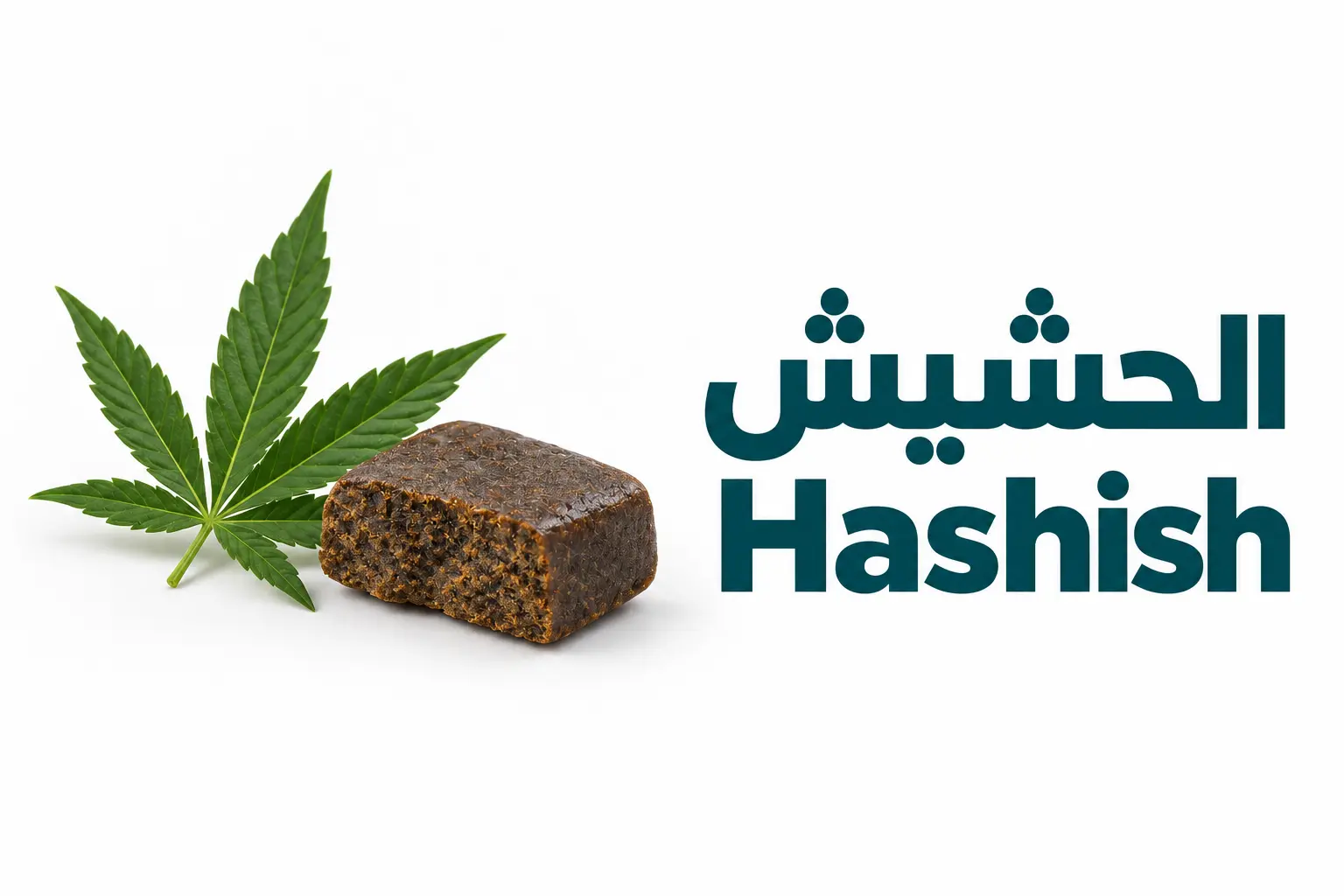
If you find an unknown substance, do not taste or handle it to identify it, and keep it away from children. Pictures online cannot confirm a product’s safety.
For more on THC concentrates used in vaping, read our Arabic guide to THC vaping risks.
How does hashish affect the brain and body?
THC acts on the endocannabinoid system and can change attention, memory, perception, coordination and decision-making. Someone may report relaxation or altered sensations, but intoxication can also bring anxiety, panic and paranoia. [Source] [Source]
Effects depend on THC concentration, frequency of use, route of administration and other substances such as alcohol. Edible products can act later than expected and carry a greater risk of unintentional overconsumption. [Source]
What are the signs and symptoms of hashish use?
Possible short-term signs include red eyes, dry mouth, increased appetite, altered attention, slower reactions, impaired coordination and changes in perception. Some people experience panic, confusion or suspicious thoughts. No single sign proves cannabis use, because other conditions can cause similar symptoms. [Source] [Source]
If changes in sleep, mood, memory or day-to-day functioning are recurring—and stopping has become difficult—a respectful clinical assessment is more useful than an accusation.
What are the health risks and long-term effects of hashish?
Cannabis can impair learning, memory, attention and reaction time, increasing safety concerns such as impaired driving. It can also raise heart rate and blood pressure shortly after use. Smoking cannabis can damage lung tissue and contribute to airway symptoms. [Source] [Source]
Cannabis may trigger anxiety, panic or paranoia. Cannabis use is associated with an increased risk of psychosis and certain mental health conditions in some groups, particularly with earlier initiation and more frequent use. This does not mean every user will develop schizophrenia, or that cannabis is the sole cause in every case. [Source]
Adolescents, pregnant people and those who are breastfeeding require particular caution. The CDC advises against cannabis use during pregnancy and breastfeeding because of potential risks to development. [Source]
When are cannabis-related symptoms an emergency?
Severe confusion, hallucinations, chest pain, breathing difficulties or loss of consciousness require urgent medical assessment. Suicidal thoughts or behavior that puts someone at immediate risk must also be treated as urgent. [Source] [Source]
Accidental ingestion of THC-containing products can be particularly serious for children. Seek urgent professional advice if a child may have swallowed cannabis. [Source]
Can you become addicted to hashish? Signs of cannabis use disorder
Yes. Repeated cannabis use can lead to cannabis use disorder. Warning signs include failed attempts to cut down, frequent cravings, using more than intended and continuing despite harm to work, study or relationships. A diagnosis does not require every symptom to be present. [Source]
Using hashish only on certain days does not automatically make use harmless. The important questions are whether a person can control their use and how it affects their health and daily life.
How long does hashish stay detectable in urine after occasional use?
Urine tests generally identify THC-COOH, an inactive metabolite of THC, rather than measuring whether a person is currently intoxicated. The detection window varies with dose, frequency, testing method, cutoff and individual metabolism. [Source]
Mayo Clinic Laboratories lists approximate detection windows of up to three days after a single use and up to about 30 days in chronic heavy users. These figures are not guarantees of a negative or positive test result for an individual. [Source]
| Pattern of use | Approximate urine detection window in Mayo reference |
|---|---|
| Single use | Up to about 3 days |
| Moderate, repeated use | Up to about 5 days |
| Heavy daily use | Up to about 10 days |
| Chronic heavy use | Up to about 30 days |
“Not addicted” is not the same as “one-time use.”
A person may use cannabis repeatedly without meeting the criteria for cannabis use disorder, yet still test positive for longer than someone who used it once. No home remedy can guarantee rapid clearance or a predictable test outcome. [Source]
Are there signs that hashish has left the body?
No visible symptom can reliably confirm that THC metabolites have cleared. Feeling more alert or sleeping better does not guarantee a negative urine test. Equally, a positive urine test does not by itself prove that someone is currently impaired. [Source]
Withdrawal symptoms may occur as the body adjusts after regular use stops; they are not a direct measurement of how much THC remains.
Cannabis withdrawal symptoms: when do they start and how long do they last?
After regular cannabis use stops, some people experience irritability, anxiety, sleep disturbance, vivid dreams, reduced appetite and low mood. Headache, sweating or abdominal discomfort can also occur. Symptoms commonly begin 24–48 hours after cessation and often peak on days 2–6. Some symptoms can last two to three weeks or longer in heavy users. These are typical patterns, not fixed deadlines. [Source]
Cannabis withdrawal alone is generally not associated with the dangerous physical complications seen with alcohol or certain sedatives. Severe mental distress, suicidal thoughts or withdrawal from multiple substances, however, warrants prompt professional assessment. [Source]
Can cannabis addiction be treated at home?
For some clinically stable people, treatment can take place through outpatient appointments while they live at home. Home-based recovery is not appropriate for everyone. A clinician should assess the amount and frequency of use, withdrawal symptoms, mental health, other substances and the support available. [Source]
If there are hallucinations, severe confusion, thoughts of self-harm, or heavy use of alcohol or sedatives as well, seek urgent specialist advice rather than relying on an unsupervised home plan. Read more in our guide to addiction treatment at home.
How is hashish addiction treated?
At Masar Center in Jeddah, we begin with a medical and psychological assessment to understand cannabis use, any co-occurring concerns and the impact on everyday life. Not everyone who uses hashish needs inpatient care or hospital detoxification.
Evidence-based behavioral approaches can include cognitive behavioral therapy (CBT), motivational enhancement therapy and contingency management. There are currently no FDA-approved medications specifically for cannabis use disorder, although research is ongoing. [Source]
Where clinically appropriate, we coordinate care for co-occurring mental health conditions, involve family with the patient’s consent and arrange aftercare support. Learn about the stages of addiction treatment.
How can families support someone using hashish?
Choose a calm moment when the person is not intoxicated. Describe the changes you have noticed without using labels or blame. Ask what feels difficult about cutting down, and offer practical help with arranging an assessment.
Respect their privacy and avoid threats or confrontation. If there is an immediate danger, urgent medical assistance takes priority.
Does cannabis have medical uses, and does that make hashish safe?
Specific cannabinoids are being studied for certain medical conditions, and some countries authorize regulated cannabinoid-based medicines for particular indications. That does not make unregulated hashish safe or equivalent to a prescription medicine. The ingredients, doses, manufacturing and oversight can differ substantially. [Source]
If you are using hashish to cope with pain, anxiety or sleep problems, speak to a clinician about those symptoms rather than delaying an assessment.
Hashish in Saudi Arabia: when should you seek support?
Intoxicating cannabis products are controlled in Saudi Arabia. The Saudi Ministry of Health highlights the risks of substance use and the importance of prevention and treatment. This article does not specify legal penalties, which depend on the current law and the facts of each case. [Source]
If you are find it difficult to stop using hashish, you can contact us at Masar Center for a confidential assessment and advice on suitable treatment options. An inpatient admission is not automatically required.
Frequently asked questions
Is hashish the same as cannabis?
Cannabis names the plant; hashish is a resin product derived from it. [Source]
Is hashish the same as marijuana?
Both come from cannabis, but marijuana generally refers to dried plant material and hashish to resin. [Source]
Are all types of hashish equally strong?
No. THC concentration varies, and appearance alone cannot reliably tell you a product’s potency. [Source]
Is hash oil the same as hashish hair oil?
Not necessarily. A cosmetic hair oil should not be assumed to have the composition or effects of an intoxicating THC extract.
How long does hashish show up in a urine test after one use?
A Mayo Clinic Laboratories reference gives an approximate window of up to three days after a single use. Results vary by testing method and individual factors. [Source]
Does feeling normal mean THC has left the body?
No. Feeling normal and having a negative urine test are different things.
Does hashish cause schizophrenia?
Cannabis use is associated with a higher risk of psychosis and schizophrenia, especially with early and frequent use, but it does not mean every user will develop the condition. [Source]
Can hashish cause addiction?
Yes. Some people develop cannabis use disorder, including cravings, unsuccessful attempts to stop and continued use despite problems. [Source]
How long do cannabis withdrawal symptoms last?
Symptoms often start within 24–48 hours and peak around days 2–6. Sleep and mood symptoms may last longer in some heavy users. [Source]
Can cannabis use disorder be treated without inpatient admission?
Yes, many clinically stable people can receive outpatient care; the level of care depends on a professional assessment.
Are there FDA-approved medicines specifically for cannabis addiction?
There are currently no FDA-approved medicines specifically for cannabis use disorder; psychosocial treatments are central. [Source]
Medical sources and references
- What is the difference between cannabis, weed, hemp and hash?
- CDC — Cannabis Health Effects
- CDC — About Cannabis
- CDC — Cannabis and Mental Health
- CDC — Cannabis and Poisoning
- CDC — Cannabis and Driving
- CDC — Cannabis and Pregnancy
- NIDA — Cannabis (Marijuana), dependence and treatment
- NIDA — Can marijuana use lead to substance use disorder?
- Connor et al. — Clinical management of cannabis withdrawal, 2022
- Mayo Clinic Laboratories — Marijuana drug testing and detection
- Saudi Ministry of Health — Addiction and Drugs
- NCCIH — Cannabis, Marijuana and Cannabinoids
This guide is for educational purposes and is not a substitute for individual medical evaluation. Detection estimates cannot predict an individual test result.